
by Martin Murmel
Introduction
The most western part of Europe is the Irish Atlantic coast. The gulf stream passes by and provides mild winters, moderate summers and plenty of rain. The grass grows for ten months a year, and it is no wonder that those ideal conditions produce high-quality farm products. Ireland is called the emerald island because of the lush pastures, grasslands and the green appearance of its countryside.

Ireland's West Coast
The land and it's produces
Farming is still a common way of life in rural areas and contributes heavily to the Irish economy. More cattle and sheep are wandering the rolling hills than people living in Ireland. Beef production outnumbers that of lamb and pork by far. The Irish love affair with beef strongly continues. A good steak (rare to medium) with potatoes, vegetables and gravy is still widely popular in homes and restaurants around the country. A cornerstone of the Irish diet was and is dairy.
Milk (rich in proteins and vitamins), cheese and creamy, salted butter are the stars of Irish dairy production. Whoever had a fresh slice of warm soda bread (or toast) with slowly melting Irish butter on top knows why such a humble meal can be so immensely satisfying. Now imagine this slice of buttered bread with a hearty stew or a creamy seafood chowder, and you know why this is such an excellent comfort food.
When you drive across the country, you see rich green pastures and fields of cereals, potatoes and other crops. Most of it is for feeding the livestock while the rest goes into food and beverage production. Irish agriculture also supports the growing demand for cereals for their beer and whiskey production. Beer in Ireland is almost synonymous with Guinness (stout), but nowadays there are also many excellent craft beer breweries producing world-class ales, IPA's and stouts. Especially the ever-growing market for Irish whiskey demands more quality grains every year.
Ireland produces some of the world best and smoothest whiskeys like Redbreast, Teeling, Jameson, Midleton, Writers Tears and Bushmills amongst many others (see image at the end of the article). They are always triple distilled, spent a minimum of 3 years in cask and spelt with an e (in contrast to whisky for the Scotch version).
Beers and whiskey are also used in cooking, for example, the hearty Guinness beef stew or whiskey flavored desserts and sweets.
Ireland is surrounded by fish and seafood rich waters. Together with the catholic rule of not allowing meats on Fridays, fish became a staple for Irish households in the past. You could have kippers for breakfast (salted and smoked herring), seafood chowder with soda bread for lunch and oysters, Dublin bay prawns or cod for dinner.
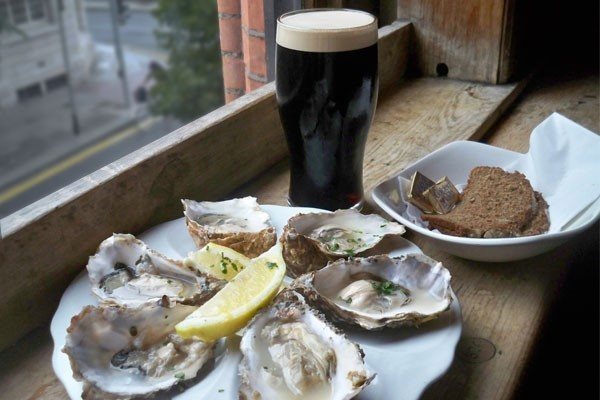
Oysters and Guinness
o
The vibrant city of Galway in the West of Ireland hosts one of the most celebrated International Oyster Festivals worldwide.
The end of September marks the beginning of the oyster season and many restaurants, bars and pubs offer them together with a pint of Guinness. The salty oyster goes exceptionally well with the slightly sweet roast aromas of the black stout.
ur text here...
Dishes of Ireland
The available produce shapes the culinary landscape in Ireland. There are some traditional Irish dishes still served today:
Irish stew
Originally with lamb or mutton, potatoes and vegetables (carrots, parsnips). Some households and restaurants use beef as well, and nearly everybody has their particular twist and interpretation of this heartwarming dish (see image below).
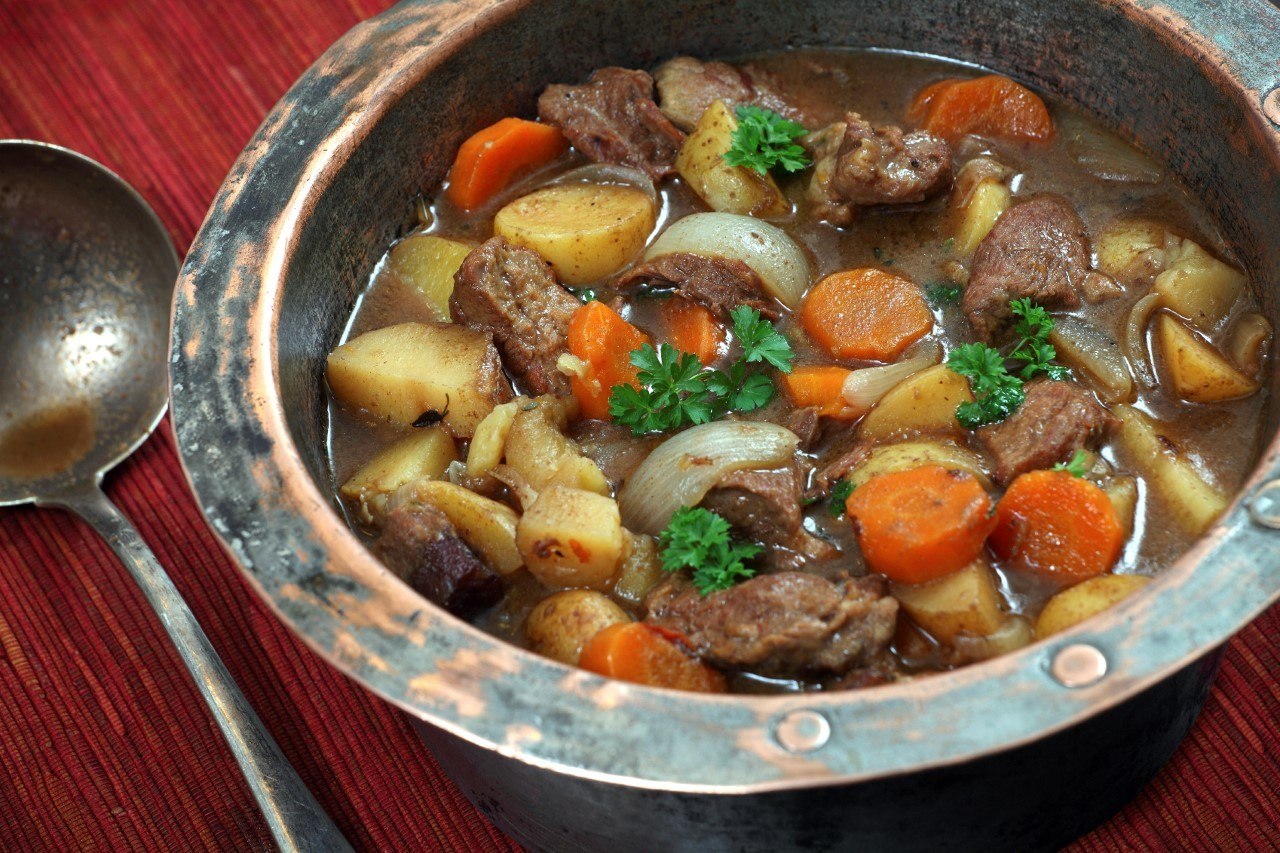
Irish Stew
Guinness beef stew
The stout gives the dish a complex, deep and satisfying flavor. Ireland's answer to the French Coq Au Vin or the Hungarian Goulash.
Colcannon
A straightforward dish of mashed potatoes with cooked cabbage or kale, some spring onions and a generous helping of Irish salted butter. Quick and delicious.
Bacon and cabbage There are many versions of this classic recipe, often with boiled, roasted or mashed potatoes.
Coddle
Usually associated with the capital Dublin, coddle is a bit of a leftover recipe. It always includes pork sausages, sliced bacon (called rashers), potatoes and onions. Sometimes vegetables like carrots are added, or whatever the fridge has to offer. All ingredients are cooked together, which results in a hearty and wholesome one-pot-wonder.
Boxty
Very popular potato pancakes in the Midlands and the Northern counties in Ireland. There are many variations, but they all start with finely grated raw potatoes, flour, buttermilk and baking soda. The mix is fried like thick pancakes and can be eaten on its own or accompany meats or vegetables.
Fish & Chips
Not originally Irish but enthusiastically adopted by almost every Irish person on the island. Going to the "chipper" is part of Irish lives as the pint of beer in the pub and talking about the ever-changing weather.
Almost every dish has potatoes in it. Boiled, mashed, roasted, baked or fried - the Irish love their "spuds".
Irish cooking today
The last three decades have seen a remarkable revival of the Irish food scene and have re-defined the culinary landscape. Driven by the high standard of the agricultural products, new artisan producers, the economic upswing and a new confidence, Irish chefs have made a name for themselves around the world.
The common factor in Irish cooking is the superb quality of the raw ingredients available on the island and in the waters around it. The products themselves like beef, lamb, ham and bacon, fish, seafood and vegetables have not changed over the last century. The difference is that now Irish chefs have found new, modern and sophisticated ways to incorporate them into their cooking and presentation.
The lack of restrictive tradition in Irish kitchens has a liberating effect on today's cooking. Irish chefs can let their imagination run wild without the restraints of binding customs and rules. It makes contemporary Irish cooking imaginative, innovative, unique and very exciting. Nowadays the Irish gastronomy sector caters to any palate - from the traditional Fish & Chips shop to Michelin starred restaurants and anything in between.